

Samsung Washer Repair in Leesburg, VA
Power fluctuations from electrical storms and hard water mineral buildup are common concerns for Leesburg-area homeowners, and both can strain a Samsung washer's performance over time. Tanner Appliance Repair connects you with local independent providers who diagnose and repair Samsung washers, helping you avoid the cost and inconvenience of replacing a machine that may have years of reliable use ahead.
Samsung Washer Repair Services for Leesburg Homeowners
Leesburg homeowners rely on their washing machines year-round, but the region's hard water supply and exposure to power fluctuations from summer thunderstorms and winter weather events can strain these appliances faster than expected. When a Samsung washer begins to malfunction—whether it's a drainage issue, drum problem, or electrical glitch—the repair needs to happen quickly to keep laundry routines on track. A broken washer isn't just an inconvenience; it disrupts daily life, especially for families in established neighborhoods like River Pointe and Potomac Station where reliable home systems matter.
Tanner Appliance Repair connects Leesburg homeowners with independent local providers who understand Samsung washer systems inside and out. When you reach out, the process is straightforward: describe what's happening with your washer, and a nearby provider is matched to your location and availability. These independent technicians arrive ready to diagnose the issue thoroughly, identify the root cause, and explain your repair options before proceeding. Whether the problem is simple or complex, the focus stays on getting your Samsung washer working dependably again, so your household can return to normal.
Common Samsung Washer Error Codes
Samsung documents these twelve codes most often on washers. Seven typically trace to something simple — a blockage, a latch, a setting — and five to a component that needs replacing.
Samsung Washer 4C
Often clearable without a technician
What it means: The washer asked for water and did not get what it expected, so it has stopped rather than run a cycle dry. Samsung shows this as 4C on newer panels, 4E on older ones and nF on some models — one fault, three displays.
Why it happens: Almost always something before the machine rather than inside it: a supply tap not fully open, a kinked fill hose behind the unit, or the small mesh screens where the hoses meet the washer silted up with scale and grit.
What you can check: Check both taps are fully open, then pull the machine out far enough to see the fill hoses are not kinked. If that looks fine, turn the taps off, unscrew the hoses at the machine end and look at the inlet screens for debris.
When to call someone: If the supply is good and the screens are clear, the inlet valve on the machine is next, and that is where it stops being an owner check.
Samsung Washer Ub
Often clearable without a technician
What it means: The load has gone off balance in the tub and the washer will not spin it at speed, because an unbalanced drum at spin speed can damage the machine.
Why it happens: Usually one heavy item on its own — a towel, a bath mat, a single pair of jeans — or a load that has twisted into a rope on one side of the drum.
What you can check: Open the door, redistribute the load by hand and restart the spin. Adding a couple of similar-weight items often settles it; washing one heavy item alone rarely spins well.
When to call someone: If it trips on every load including well-balanced ones, the suspension or the sensor reading the drum may need looking at.
Samsung Washer 4E
Often clearable without a technician
What it means: The same not-filling fault as 4C, shown as 4E on older Samsung panels.
Why it happens: A closed or partly closed tap, a kinked fill hose, or blocked inlet screens where the hoses connect.
What you can check: Work from the wall in: taps fully open, hoses unkinked, then the inlet screens at the machine end.
When to call someone: If water reaches the machine freely and it still will not fill, the inlet valve needs testing.
Samsung Washer SE
Often clearable without a technician
What it means: Water is not leaving the machine at the rate the cycle expects, or is not leaving at all. Shown as 5E, SE, 5C or nd depending on the panel.
Why it happens: The debris filter at the bottom front catches coins, hair grips and lint and eventually packs solid. A kinked drain hose or a standpipe that cannot take the flow does the same thing from further down the line.
What you can check: Open the small flap at the bottom front, drain the residual water into a tray and clean the filter. Then check the drain hose behind the machine for kinks and that it is not pushed too far into the standpipe.
When to call someone: If the filter is clean and the hose run is clear, the drain pump itself needs testing.
Samsung Washer UE
Often clearable without a technician
What it means: The same unbalanced-load condition as Ub, shown as UE on some Samsung models.
Why it happens: A single heavy item, or a load that has bunched to one side of the drum.
What you can check: Redistribute the load by hand and restart the spin.
When to call someone: If balanced loads also trip it, the drum suspension is worth checking.
Samsung Washer dC
Often clearable without a technician
What it means: The washer cannot confirm the door is shut and locked, so it will not start or will stop mid-cycle.
Why it happens: Most often laundry caught in the door seal stopping it closing flush, or a door that has been slammed rather than pushed shut.
What you can check: Open the door fully, clear anything caught around the seal, and close it firmly without forcing it. Check the latch and the strike plate for anything obstructing them.
When to call someone: If nothing is obstructing it and the lock still will not engage, the door lock assembly is the usual cause.
Samsung Washer SUd
Often clearable without a technician
What it means: The washer has detected far more foam than the drum is designed to handle, and is pausing to clear it before continuing.
Why it happens: Usually too much detergent, or a standard detergent used in a high-efficiency machine, which foams several times more than an HE formula.
What you can check: Let the machine run its own suds-clearing routine rather than cutting the cycle short. Next load, reduce the dose and check the detergent is HE-rated if your machine needs one.
When to call someone: If it appears with a correct HE dose, something may be holding water in the drum and it is worth having checked.
Samsung Washer 5C
Often clearable without a technician
What it means: The same not-draining fault as 5E and SE, shown as 5C on some Samsung panels.
Why it happens: A packed debris filter at the bottom front, a kinked drain hose, or a standpipe that cannot take the flow.
What you can check: Clean the filter behind the flap at the bottom front, draining the residual water into a tray first, then check the hose run behind the machine.
When to call someone: If the filter is clean and the hose is clear, the drain pump needs testing.
Samsung Washer nF
Often clearable without a technician
What it means: The washer is not filling — the same fault Samsung shows as 4C and 4E on other panels.
Why it happens: A tap that is not fully open, a kinked fill hose, or the inlet screens where the hoses meet the machine blocked with scale and grit.
What you can check: Check both taps, straighten the hoses, then turn the taps off and inspect the inlet screens at the machine end.
When to call someone: If water reaches the machine freely and it still will not fill, the inlet valve is next.
Samsung Washer OE
Usually needs a technician
What it means: There is more water in the tub than there should be, so the washer has stopped filling and is trying to pump out.
Why it happens: Normally the inlet valve passing water when it has been told to close, rather than anything to do with the load or detergent.
What you can check: Turn the supply taps off at the wall so no more water can arrive. There is no owner-side fix for a valve that will not shut.
When to call someone: Promptly — a valve stuck open is a flood risk as well as an error code.
Samsung Washer 0E
Usually needs a technician
What it means: The same overfill condition as OE, shown with a zero on some panels.
Why it happens: An inlet valve letting water through when it should be closed.
What you can check: Shut the taps at the wall to stop the fill. Nothing else here is an owner check.
When to call someone: Promptly, for the same reason as OE.
Samsung Washer ddC
Often clearable without a technician
What it means: The AddWash door — the small hatch in the main door — is not registering as closed and latched.
Why it happens: It is easy to push shut without seating the catch, and a trapped sock or glove will stop it closing flush.
What you can check: Open the AddWash door fully, clear anything caught in it, and press it closed until the catch engages.
When to call someone: If it is properly shut and still reads open, the hatch switch needs checking.
Samsung Washer HE
Usually needs a technician
What it means: A fault in the heater circuit, so the machine cannot bring the wash water up to the temperature the cycle asked for.
Why it happens: A component failure rather than anything that builds up, so it usually appears without warning.
What you can check: Nothing here is an owner check — the heater and its circuit are inside the machine.
When to call someone: When you see it. Cold-water cycles may still run, but the machine is not doing what the programme selected.
Samsung Washer 5E
Often clearable without a technician
What it means: The same not-draining fault Samsung shows as SE and 5C on other panels.
Why it happens: A packed debris filter at the bottom front, a kinked drain hose, or a standpipe that cannot take the flow.
What you can check: Open the flap at the bottom front, drain the residual water into a tray and clean the filter, then check the hose run.
When to call someone: If the filter and hose are clear and it still will not drain, the drain pump needs testing.
Samsung Washer LE
Usually needs a technician
What it means: Moisture has been found somewhere inside the machine it should not be — a leak, not a setting.
Why it happens: Water escaping from a hose connection, a seal or the tub reaches a sensor that shuts the cycle down.
What you can check: Turn the supply taps off at the wall and stop using the machine. The code says water is escaping but not from where.
When to call someone: This needs a technician — tracing the source means getting behind or under the machine.
Samsung Washer 3E
Usually needs a technician
What it means: A motor fault — the drive is not behaving the way the control expects.
Why it happens: A failure in the motor or its control circuit rather than anything to do with the load or detergent.
What you can check: Nothing here is an owner check. A single power-cycle at the breaker clears a one-off glitch; a code that returns is real.
When to call someone: If it comes back after a power cycle, the motor circuit needs testing.
| Code | What it means |
|---|---|
| Ub / UE / U6 | The load is unbalanced inside the tub, so the washer cannot spin it safely. |
| 5E / SE / 5C / nd | Water is not draining at the rate it should, or is not draining at all. |
| dC / dC1 / dL | The door is not being detected as closed and locked, so the cycle will not run. |
| SUd / Sd | An over-sudsing condition has been detected and the machine is pausing to let the foam clear. |
| OE / 0E / OC | There is too much water in the washer, which normally means the inlet valve is passing water when it should be shut. |
| LE / 1C | Moisture has been detected somewhere inside the machine that it should not be, which is a leak rather than a setting. |
| HE / HC | A fault in the heater circuit, so the machine cannot bring the water up to temperature. |
| 3E / 3C | A motor fault — the drive is not behaving as the control expects. |
| tE / tC | The temperature sensor is reporting a reading outside the range the cycle allows. |
| bE2 / 6E2 | A button on the control panel is reading as stuck or continuously pressed. |
Don't see your code? Call (703) 224-5111 — we'll help you track it down.
Common Samsung Washer Problems We Fix
Won't Drain Water
A clogged drain hose, faulty drain pump, or blocked filter trap can prevent water from leaving the drum. Tanner Appliance Repair connects you with a local provider who diagnoses the blockage and restores proper drainage.
Not Spinning or Agitating
Worn drum bearings, a broken belt, or motor issues can stop the wash action mid-cycle. The independent provider we connect you with will identify which component has failed and repair or replace it.
Leaking Water
A cracked tub, worn door seal, or loose inlet hose connection typically causes pooling water. Tanner Appliance Repair links you with a local technician who pinpoints the leak source and seals or replaces the faulty part.
Error Code Displayed
Samsung washers show error codes for sensor faults, electrical issues, or component failures. The local provider Tanner Appliance Repair connects you with can read the code and address the underlying problem.
Loud or Vibrating Heavily
Unbalanced loads, worn drum rollers, or a damaged pulley often create excessive noise and movement during the wash cycle. A local provider will inspect and repair the worn part to restore quiet operation.
Won't Start or Complete Cycle
Control board glitches, broken latches, or power supply problems can prevent the washer from running. Tanner Appliance Repair connects you with a local technician who tests and fixes the startup or cycle issue.
Why Leesburg Homeowners Trust Tanner for Samsung Washer Repair
Samsung Washer Repair From Local Providers
Tanner connects you with independent local providers who service Samsung washers throughout Leesburg. Fast response times mean your laundry routine gets back on track without unnecessary delay.
Clear Communication Every Step
Samsung washer repair involves several moving parts—drum, motor, valve assembly. Local providers explain what's happening and why, so you understand the repair before work begins.
Thorough Samsung Washer Diagnostics
Leaks, spin cycles that fail, or strange noises demand a complete look. Providers connected through Tanner perform careful diagnosis of your Samsung washer to find the root cause, not just the obvious symptom.
Protection Against Electrical Strain
Northern Virginia's frequent thunderstorms and winter weather patterns create power fluctuations that stress appliances like Samsung washers. Local providers understand these seasonal risks and can evaluate whether electrical surges have affected your unit's performance or longevity.
How Our Repair Service Works
Schedule Your Samsung Washer Repair
Contact Tanner Appliance Repair to describe your Samsung washer issue and your Leesburg address. We'll connect you with a local independent repair provider who can assess your machine and discuss next steps with you.
Technician Diagnoses Your Samsung Washer
The independent provider visits your home to inspect your Samsung washer, identify the problem, and explain what repair is needed. Power surges from severe weather common to the region can damage electronic controls—your technician will check for this and other failure points.
Samsung Washer Repair Completed
Once you approve the repair plan, the independent provider completes the work on your Samsung washer and tests it to confirm proper operation. You'll receive information about what was repaired and care tips to help prevent future issues.
Need appliance repair in Leesburg? Our technicians can help fast.
Call (703) 224-5111Samsung Washer Repair FAQ — Leesburg, VA
Samsung washer repair addresses issues like drum problems, water leaks, drainage failures, cycle errors, and control panel malfunctions. A local provider will diagnose the specific problem—whether it's a worn seal, clogged filter, faulty pump, or electrical fault—and replace or repair the affected part. You'll get a clear explanation of what's wrong and what repair work is needed before proceeding.
Tanner Appliance Repair connects you with independent local providers who service the Leesburg area. Many are able to schedule appointments within a few days, and some may have availability sooner depending on current demand. Once you submit your request, you'll receive contact information so you can confirm timing directly with the provider who will handle your repair.
Repair costs depend on what's broken—a simple fix like clearing a clogged drain costs less than replacing a drum or motor assembly. The specific Samsung model, parts availability, and labor time all influence the final price. Each independent provider sets their own rates, so it's worth asking for a diagnostic cost and repair estimate before committing to the work.
Clear the area around your washer so the technician can access it easily and have room to work. If your machine is stuck mid-cycle or filled with water, don't force it open. Let the provider know about any unusual sounds, error codes, or patterns you've noticed—this information helps with diagnosis. Have your Samsung model number available if possible.
Use the right amount of detergent for your water hardness and load size, clean the rubber door seal regularly to prevent mold and leaks, and run an empty hot cycle monthly. Check hoses for kinks or cracks, and wipe down the drum periodically. These simple steps reduce wear and help your washer run reliably longer.
Yes. Leesburg's moderately hard water can leave mineral deposits inside your washer over time, affecting performance and strain on internal parts. Additionally, the region's frequent thunderstorms and winter weather can create power fluctuations that stress washer electronics and motors. Regular maintenance and quick repairs help protect your machine from these regional challenges.
Samsung Washer Repair Across Leesburg
Leesburg's water supply carries moderate mineral content that can accumulate inside washing machines over time, affecting drum seals, fill valves, and spray jets—issues that Samsung washers are as susceptible to as any other brand. Hard water buildup tends to worsen gradually, so a repair that addresses mineral deposits early can prevent costlier damage later. Homeowners in neighborhoods like Potomac Station and River Pointe, as well as throughout the surrounding area, often discover these issues when performance drops or cycles run longer than expected.
Beyond water quality, Leesburg's weather patterns introduce electrical stress to home appliances. The region sees frequent severe summer thunderstorms and occasional tropical remnants, both of which can trigger power surges that damage washer control boards and motor components. Winter ice storms add another layer of electrical volatility. When a Samsung washer stops mid-cycle or won't start after a storm, the cause is often surge-related rather than mechanical—and diagnosing that quickly makes the difference between a minor repair and a full replacement. Local independent repair providers connected through Tanner Appliance Repair can typically reach Leesburg addresses promptly to assess whether your washer needs parts replacement, reset, or full service.
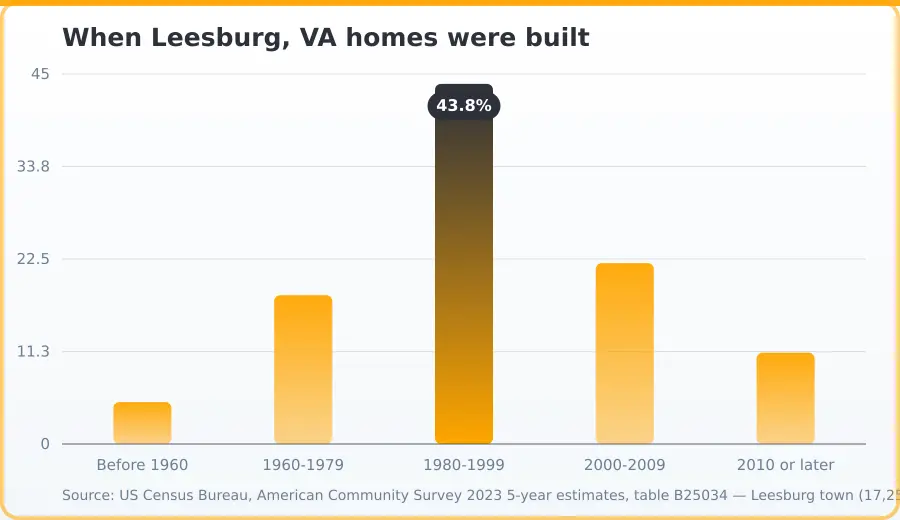
| Period | When homes were built (%) |
|---|---|
| Before 1960 | 5.1 |
| 1960-1979 | 18.1 |
| 1980-1999 | 43.8 |
| 2000-2009 | 22 |
| 2010 or later | 11.1 |
Source: US Census Bureau, American Community Survey 2023 5-year estimates, table B25034 — Leesburg town (17,252 housing units). Retrieved October 5, 2026.
More Repairs for This Brand
More Ways We Can Help
Homeowner Safety Toolkit
Confirm Who You're Hiring in Leesburg, VA
Before you hire anyone, use these independent national resources to confirm credentials, standards, and track record.
CPSC
Check whether your specific appliance has an open safety recall before paying for a repair — some recalls cover the fix or a replacement for free.
Check for RecallsNFPA
A poorly repaired dryer, range, or water heater is a real fire risk. The National Fire Protection Association's home safety guidance covers what to check after any appliance service.
Appliance Fire Safety TipsEPA
Anyone who services a refrigerator, freezer, or other appliance containing refrigerant is legally required to hold EPA Section 608 certification. See what that actually requires.
Refrigerant Certification RulesBook your Leesburg appliance repair today.
Call (703) 224-5111Where We Cover Near Leesburg, Virginia
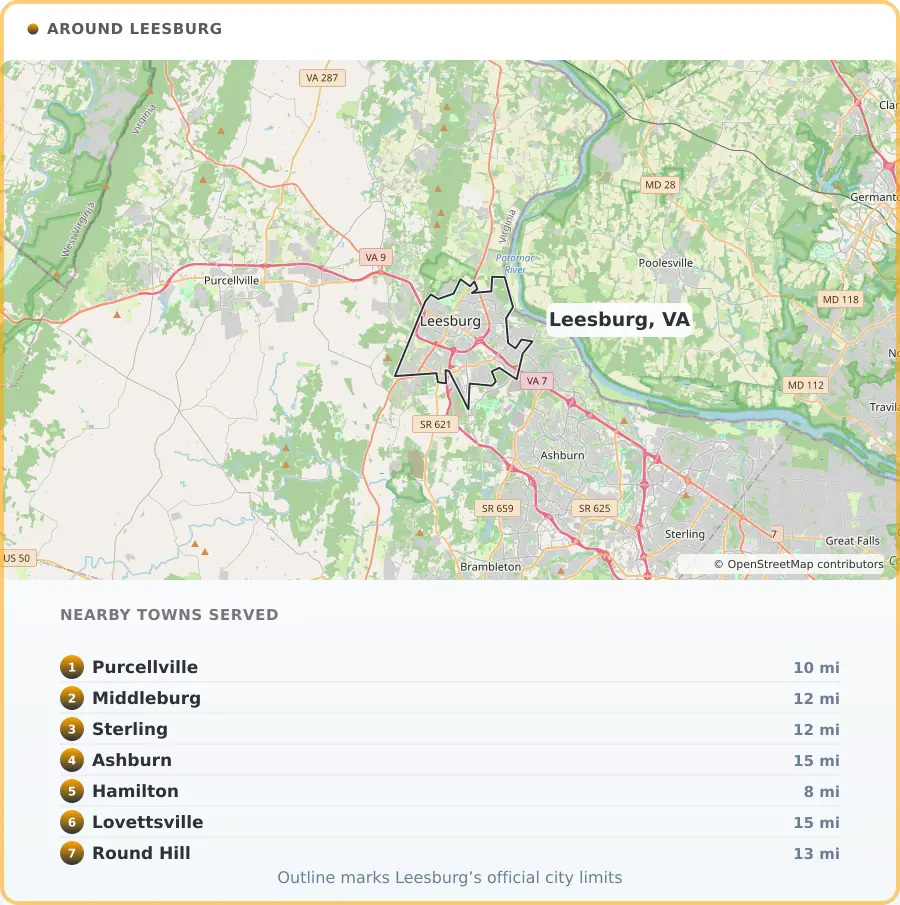
Leesburg, VA is the centre of the service area, which extends to 7 surrounding towns. The map shows how far that reaches.
Leesburg, VA Information
As the county seat of Loudoun County, Leesburg, VA sits at the center of one of Virginia's most dynamic regions, where government offices, healthcare, and retail converge with a fast-expanding data center and technology corridor. Roughly 54,000 residents call it home, supported by major employers like Inova Loudoun Hospital, Loudoun County Public Schools, and the Leesburg Premium Outlets, which pull shoppers from well beyond town limits. A growing base of professional services firms adds steady momentum to the local economy.
Beyond the workday, Leesburg carries a warmth shaped by its historic downtown, nearby wineries, and a patchwork of established neighborhoods from Potomac Station to River Creek. It's a place where small-town character and regional pull coexist comfortably. For homeowners here, Tanner Appliance Repair offers a quick, local connection to independent providers who know the area well.
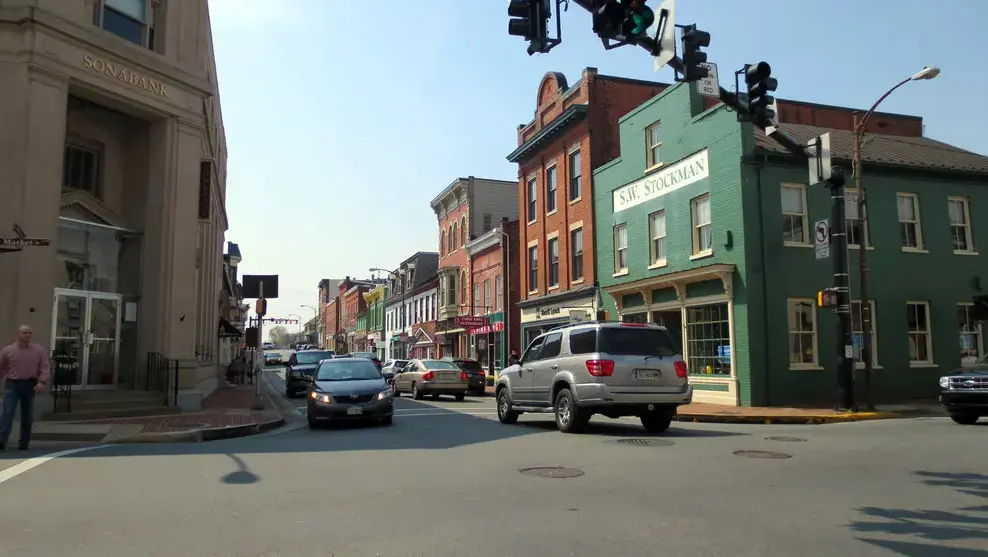
Photo: Wallygva, CC BY-SA 3.0